
San Francisco doesn’t have many neighborhoods that combine flat terrain with direct waterfront access in a residential setting. The Marina is one of the few, and that combination shapes nearly everything about who buys here and what they pay for it.
The 12-month median house price through May 2026 reached $4,915,000, at $1,669 per square foot, per Compass market data. Those numbers reflect a neighborhood that has matured well beyond its old reputation and now commands serious, sustained demand from a buyer base that has broadened considerably in recent years.
A Neighborhood Built on Reinvention
The Marina didn’t exist as land until the early 20th century. The site was a shallow tidal cove and marshland until rubble from the 1906 earthquake was used to fill it in, creating the ground for the 1915 Panama-Pacific International Exposition. When the fair closed, the city sold the land to private developers, who built out the residential neighborhood that stands today across the 1920s and early 1930s. The Palace of Fine Arts is the only structure that survives from the original exposition, and it remains the neighborhood’s most recognizable landmark.
That construction era left the Marina with a distinct architectural identity and a distinct housing typology. The classic Marina flat, stacked two or three units in a single building with shared garage parking below, defines much of the residential stock alongside Mediterranean and Spanish Revival single-family homes and a smaller number of Art Deco and Streamline Moderne buildings. The neighborhood is also one of the flattest in San Francisco, which makes it unusually easy to walk or bike, a quality that sets it apart from nearly every hillside neighborhood in the city.
The neighborhood experienced notable damage during the 1989 Loma Prieta earthquake due to soil liquefaction. The seismic retrofit picture has changed considerably since then. San Francisco’s mandatory soft-story retrofit ordinance has brought most multi-unit wood-frame buildings in the neighborhood up to current standards over the past decade, and confirming a building’s retrofit compliance status is one of the first things I check before a buyer makes an offer here. Buyers who understand the geology and do the diligence tend to move forward with confidence rather than hesitation.
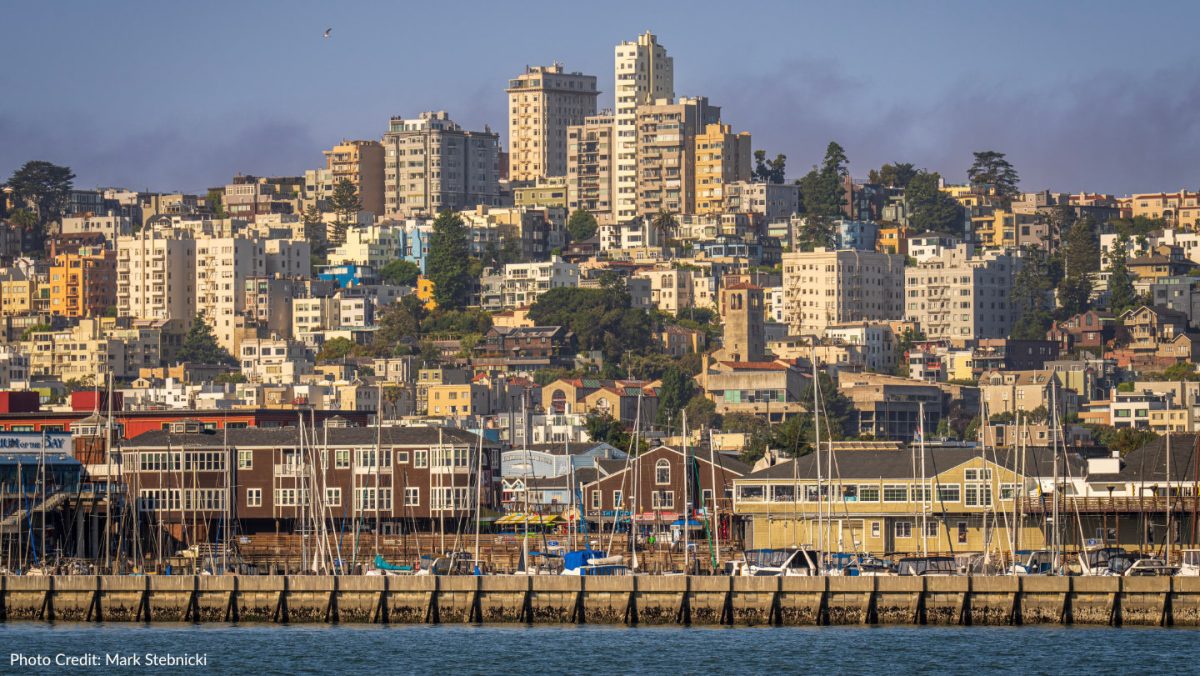
The Marina Has Two Distinct Registers
The blocks closer to Chestnut Street run livelier, denser, and more social, shaped by the restaurants and shops that anchor daily life there. The row of homes directly along Marina Boulevard, facing Marina Green and the Bay, are quieter and command a clear premium for the view and the direct proximity to the water. Buyers who know which register they want before they start touring save themselves a lot of wasted weekends.
Life in the Marina
Daily life here revolves around the water. Marina Green and Crissy Field offer open lawn and waterfront paths that are rare anywhere else in San Francisco, drawing runners, cyclists, and dog walkers throughout the day. The Presidio borders the neighborhood directly to the west, adding miles of trail access without needing a car. Fort Mason is to the east, hosting cultural events and museums alongside more green space along the bay.
Chestnut Street is the neighborhood’s commercial spine, running a dense stretch of restaurants, cafes, and boutiques from Fillmore down toward Lyon. Cow Hollow’s Union Street corridor is just south and adds another walkable shopping and dining stretch within easy reach, though it belongs to the neighboring district rather than the Marina itself.
Parking is something to keep in mind. The same waterfront landmarks that make the Marina desirable also draw heavy tourist and weekend traffic to the Palace of Fine Arts and Crissy Field, which puts real pressure on street parking for residents. Buyers who value off-street parking should weigh that heavily when comparing properties.
The neighborhood’s reputation as a destination for young professionals is rooted in real demographic shifts going back to the 1980s, when the population began moving away from the older families and longtime residents who originally settled here. That shift produced a stereotype that has outlasted the neighborhood it described. Today’s Marina buyer pool includes a meaningful share of families drawn by the parks, the schools, and the flat, walkable streets that make raising young children easier here than in much of the city.
Pricing and What Drives It
The Marina’s price profile reflects a wide range of property. Classic Marina flats and smaller condos span from the high six figures to several million dollars depending on building, floor, and view. Single-family homes generally start in the low to mid seven figures and extend well above that for larger properties on Marina Boulevard or with direct bay views. The 12-month median house price of $4,915,000 at $1,669 per square foot places the Marina firmly among San Francisco’s premium neighborhoods, trailing Pacific Heights and Cow Hollow but commanding a clear premium over most of the rest of the city.
What sustains that pricing is a combination of scarcity and lifestyle demand that does not soften with market cycles. The neighborhood’s flat terrain and direct waterfront access cannot be replicated elsewhere in San Francisco. Buyers who want that specific combination of walkability, views, and open space have one neighborhood that delivers all three at once, and that scarcity supports values even when other parts of the city see more volatility.
Who’s Buying Here
The buyer profile has broadened well past the young professional reputation that defined the Marina for decades. Established professionals in their thirties and forties, many starting families, are drawn by the combination of waterfront lifestyle and walkability that lets them skip a car for most errands. The proximity to Sherman Elementary, Marina Middle School, and Claire Lilienthal continues to bring family buyers into the neighborhood at a level that surprises people who still think of it as a starter neighborhood for singles.
Tech and AI sector buyers have also become a consistent presence, drawn by proximity to the Presidio’s growing campus tenants and the neighborhood’s relatively relaxed residential character compared to the more formal registers of Pacific Heights or Presidio Heights. These buyers tend to want a primary residence that feels less institutional and more connected to outdoor life, and the Marina delivers that without sacrificing access to the rest of the city.
What the Market Is Doing Right Now
The Marina is participating fully in San Francisco’s broader market momentum heading into summer 2026. Citywide, May saw active single-family inventory fall to levels not seen in years, with pending sales outnumbering active listings across much of the city. The Marina’s own inventory has followed that pattern, with well-positioned properties moving quickly and drawing multiple offers when priced accurately.
For buyers, preparation matters more than patience. For sellers, conditions favor those who present their properties well and price them with confidence rather than padding for negotiation.
If you’re thinking about buying or selling in the Marina, let’s connect.

Frequently Asked Questions
What is the median home price in the Marina District, San Francisco?
The 12-month rolling median house sales price in the Marina through May 2026 was $4,915,000, at $1,669 per square foot, based on Compass market data. Classic Marina flats and smaller condos span a much wider range, from the high six figures to several million dollars depending on building and unit.
Is the Marina District a good neighborhood for families?
Increasingly, yes. The neighborhood’s flat, walkable streets, waterfront parks, and access to Sherman Elementary, Marina Middle School, and Claire Lilienthal have drawn a growing share of family buyers in recent years, a shift from the neighborhood’s older reputation as a destination primarily for young singles.
Is the Marina District at risk from earthquakes?
The neighborhood is built largely on filled land, which experienced documented liquefaction damage during the 1989 Loma Prieta earthquake. San Francisco’s mandatory soft-story retrofit ordinance has since brought most multi-unit wood-frame buildings in the neighborhood up to current seismic standards. Confirming a specific building’s retrofit compliance status and permit history should be part of every buyer’s due diligence before making an offer.
What is the difference between living near Chestnut Street and living on Marina Boulevard?
The blocks near Chestnut Street are denser and more socially active, anchored by the neighborhood’s main restaurant and retail corridor. The row of homes directly along Marina Boulevard, facing Marina Green and the Bay, is quieter and commands a premium for direct waterfront proximity and views. Buyers should clarify which register fits their lifestyle before touring.
Who typically buys homes in the Marina District?
The buyer base has broadened considerably from its young professional reputation. Established professionals and growing families now make up a significant share of buyers, drawn by the neighborhood’s walkability, parks, and school access. Tech and AI sector buyers have also become a consistent presence, often choosing the Marina for its relaxed residential character relative to more formal neighborhoods nearby.